Industrial Processing Units in China: What Every Business Buyer Should Know
Industrial processing units are machines or connected equipment systems used to change raw materials into products with specific physical, chemical, or mechanical properties.
These machines perform activities such as mixing, heating, cooling, crushing, grinding, filtering, separating, drying, and forming. Their design depends on the material being processed and the production requirements.
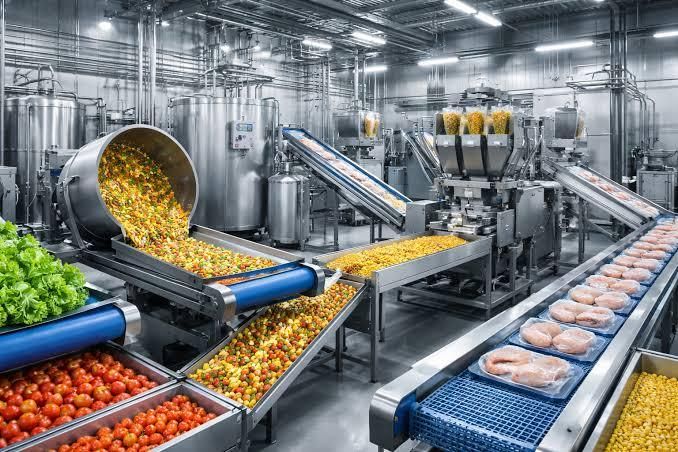
Some factories use individual machines for specific operations, while others operate integrated production lines in which materials move through several connected processing stages.
For example, a food manufacturing facility may use cleaning equipment, industrial mixers, heating systems, filtration units, and packaging machinery as part of one production process.
How Do Industrial Processing Units Work?
A typical industrial processing operation follows several stages:
Material preparation: Raw materials are measured, cleaned, sorted, or prepared for processing.
Primary processing: Equipment performs the main operation, such as crushing, mixing, heating, or separation.
Secondary processing: Materials undergo additional treatment to achieve the required characteristics.
Quality inspection: Operators check measurements, material properties, and process conditions.
Final processing: Products may undergo cooling, drying, shaping, or finishing.
Packaging and storage: Finished materials are prepared for transportation or further manufacturing.
The exact sequence varies according to the industry, material type, and production system.
What Are the Main Components?
Industrial processing systems may contain several important components:
Processing chamber: Holds the material during a particular operation.
Motors and drives: Power mechanical movement and machine operations.
Pumps and valves: Control liquid and gas movement.
Heating and cooling systems: Regulate processing temperatures.
Sensors: Monitor temperature, pressure, speed, and other operating conditions.
Control panels: Allow operators to manage machine settings.
Conveyors: Move materials between processing stages.
Why Is China Important in Industrial Equipment Manufacturing?
China has a broad manufacturing ecosystem covering machinery, electrical components, automation systems, metal processing, and industrial production equipment. This supports the production of different machine categories for domestic factories and international markets.
Which Industries Use Processing Units Manufactured in China?
Chinese industrial equipment is used across several sectors:
Food processing: Mixers, grinders, dryers, sorting machines, and production lines.
Chemical manufacturing: Reactors, storage tanks, filtration systems, and industrial pumps.
Pharmaceutical production: Mixing, granulation, drying, and specialised processing equipment.
Textile manufacturing: Dyeing, spinning, weaving, and fabric finishing machinery.
Metal processing: Cutting, forming, heating, and surface treatment equipment.
Construction materials: Cement processing, crushing, grinding, and material handling systems.
Agriculture: Grain cleaning, milling, drying, and agricultural product processing machinery.
Which Regions in China Have Industrial Machinery Clusters?
Different regions have developed manufacturing capabilities in particular equipment categories.
Jiangsu: Industrial automation, chemical equipment, food processing systems, and manufacturing machinery.
Zhejiang: Packaging equipment, filling systems, textile machinery, and processing lines.
Guangdong: Electronics manufacturing equipment, food machinery, and automated production systems.
Shandong: Food processing, agricultural machinery, and industrial equipment.
Henan: Grain processing, mining equipment, and heavy industrial machinery.
Shanghai: Industrial automation, specialised equipment, and advanced manufacturing systems.
These are broad industrial patterns. Actual manufacturing capabilities vary between cities, factories, and individual companies.
Recent Developments in China's Processing Machinery Industry
Industrial processing technology continues to develop through automation, digital monitoring, energy management, and improved machine controls.
How Is Automation Changing Industrial Processing?
Modern processing equipment increasingly uses connected systems to coordinate machine operations.
Important developments include:
Programmable logic controllers: PLCs coordinate machine functions and production sequences.
Industrial sensors: Monitor operating conditions such as pressure, temperature, and material flow.
Robotic handling: Supports material movement, sorting, and repetitive production tasks.
Digital monitoring: Helps operators examine machine performance and production information.
Automated inspection: Uses cameras and sensors to identify selected product defects.
Process control systems: Coordinate multiple machines within an integrated production line.
What Are the Current Industry Trends?
Manufacturers are paying greater attention to production flexibility, energy efficiency, equipment monitoring, and material handling.
Some facilities are integrating automated systems that allow different production stages to communicate with one another. Others are adopting equipment designed to reduce material waste and improve process consistency.
Food and pharmaceutical manufacturers are also examining hygienic equipment designs, controlled processing environments, and traceability systems. The suitability of these technologies depends on the application and relevant technical requirements.
Industrial Machinery Standards and Import Regulations
Industrial processing equipment must meet applicable safety, electrical, environmental, and product-specific requirements. These requirements may differ between China and the destination country.
Which Standards Are Relevant to Industrial Processing Equipment?
Important standards and regulatory frameworks include:
ISO 9001: Covers quality management systems.
ISO 14001: Addresses environmental management systems.
ISO 45001: Provides a framework for occupational health and safety management.
IEC standards: Cover electrical and electronic equipment requirements.
GB standards: China's national standards for different products and industrial activities.
CE requirements: May apply to machinery placed on the European Economic Area market, depending on the equipment and applicable legislation.
A management system certificate does not automatically prove that an individual machine meets every applicable product requirement.
What Should Indian Importers Check?
Businesses importing industrial processing units into India should examine:
Applicable customs classification and import duties.
Current import policy requirements.
Relevant BIS standards and mandatory certification requirements, where applicable.
Electrical safety and machine protection documentation.
Technical specifications and test reports.
Country-of-origin documentation.
Commercial invoices and packing lists.
Installation and operating manuals.
Import requirements depend on the machine category and its intended use. Businesses should verify current requirements before arranging shipment.
Types of Industrial Processing Units and Their Applications
Industrial processing units are classified according to their function, operating method, and intended material. Understanding these categories helps identify suitable equipment for different manufacturing operations.
What Are the Main Types of Industrial Processing Units?
Equipment type | Main function | Common applications |
|---|---|---|
Mixing units | Combine materials into a uniform mixture | Food, chemicals, and pharmaceuticals |
Crushing units | Reduce large materials into smaller pieces | Mining and construction |
Grinding units | Reduce particle size through mechanical action | Minerals, chemicals, and food production |
Filtration units | Separate unwanted particles from liquids or gases | Chemical and water processing |
Drying units | Remove moisture from materials | Food, textiles, and chemicals |
Heating units | Apply controlled heat during processing | Metalworking and chemical production |
Cooling units | Reduce material or product temperature | Food and industrial manufacturing |
Separation units | Divide materials according to selected properties | Agriculture, chemicals, and minerals |
Packaging units | Prepare finished products for distribution | Food, pharmaceuticals, and consumer goods |
Batch Processing vs Continuous Processing
Two common production methods are batch processing and continuous processing.
Comparison | Batch processing | Continuous processing |
|---|---|---|
Operation | Processes materials in separate batches | Processes materials through an ongoing flow |
Production control | Settings can change between batches | Requires coordinated continuous operation |
Flexibility | Suitable for different product batches | Suitable for stable production requirements |
Applications | Speciality chemicals and food products | Large-scale chemical and material production |
The appropriate method depends on production volume, material characteristics, process requirements, and factory layout.
What Should Businesses Compare Before Selecting Equipment?
Evaluation factor | What to examine |
|---|---|
Processing capacity | Expected output per hour or production cycle |
Material compatibility | Suitability for the raw materials |
Machine construction | Materials, dimensions, and structural design |
Automation | Manual, semi-automatic, or automatic operation |
Energy requirements | Electrical power, heating, and cooling needs |
Quality controls | Sensors, inspection systems, and process monitoring |
Maintenance | Inspection intervals and replacement components |
Integration | Compatibility with existing production equipment |
Tools and Resources for Evaluating Industrial Equipment
Technical and industry resources help businesses understand equipment specifications, supplier information, and import requirements.
Which Resources Help With Industrial Equipment Research?
Common resources include:
National Bureau of Statistics of China: Publishes information about industrial production and manufacturing activity.
China National Enterprise Credit Information Publicity System: Helps examine registered company information.
Bureau of Indian Standards: Provides information about relevant Indian technical standards.
International Organization for Standardization: Publishes international management and technical standards.
Manufacturer technical catalogues: Explain machine specifications, processing capacity, and operating requirements.
Independent inspection organisations: Can examine equipment condition, manufacturing quality, and agreed technical requirements.
What Documents Should Businesses Request?
Before confirming an industrial equipment order, businesses should review:
Company registration information.
Machine specifications and technical drawings.
Product photographs and operating videos.
Electrical diagrams and control system details.
Relevant quality certificates.
Testing and inspection reports.
Installation and maintenance instructions.
Spare parts information.
Packaging and shipping documentation.
A factory visit or independent inspection can help establish whether the manufacturer has the equipment and production capabilities required for the project.
Frequently Asked Questions About Industrial Processing Units in China
1. What Are Industrial Processing Units Used For?
Industrial processing units transform raw materials through operations such as mixing, crushing, heating, drying, filtering, and separation.
2. Which Industries Use Industrial Processing Units in China?
Food, chemical, pharmaceutical, textile, mining, agriculture, and construction material industries use different types of industrial processing equipment.
3. What Types of Industrial Processing Machinery Are Manufactured in China?
Common categories include mixing machines, crushers, grinders, filtration systems, drying equipment, heating units, cooling systems, and automated production lines.
4. How Can Businesses Evaluate Industrial Processing Equipment Manufacturers in China?
Businesses can examine factory facilities, company registration, machine specifications, quality documents, production capabilities, inspection records, and technical support arrangements.
5. What Documents Are Needed When Importing Industrial Machinery From China to India?
Common documents include commercial invoices, packing lists, shipping documents, technical specifications, and applicable product certificates or test reports. Additional requirements depend on the equipment category.
Conclusion
Industrial Processing Units in China cover machinery used across food, chemical, pharmaceutical, textile, metal, and construction industries. Chinese manufacturers produce individual processing machines as well as integrated production systems for different industrial applications. Businesses evaluating this equipment should examine technical specifications, manufacturing capabilities, quality documentation, and import requirements. Understanding these factors helps create a structured approach to industrial equipment sourcing.