Chinese Fully Automatic Industrial Machine Essential Insights for Modern Manufacturing
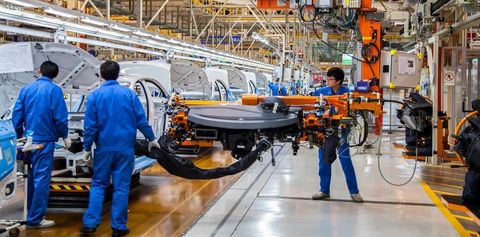
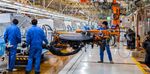
Walk into a modern factory and you'll notice something remarkable. Instead of dozens of workers performing the same repetitive tasks, many production lines now operate with machines that measure, assemble, package, and inspect products with minimal manual involvement.
These advancements have changed the way industries approach manufacturing, making production more consistent and easier to monitor. One category that has gained significant attention in global manufacturing is the Chinese Fully Automatic Industrial Machine.
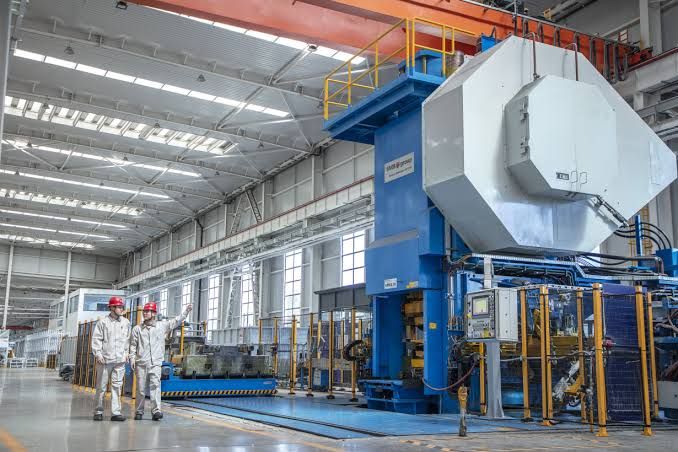
These machines are used across industries such as food processing, packaging, pharmaceuticals, electronics, automotive manufacturing, textiles, and metal fabrication. Rather than focusing on a single type of equipment, the term describes a broad range of automated machinery designed to perform production tasks with limited operator intervention.
This guide explains how these machines work, where they are used, the technologies behind them, and the factors that influence their role in modern manufacturing.
What Is a Chinese Fully Automatic Industrial Machine?
A Chinese Fully Automatic Industrial Machine is manufacturing equipment designed and produced in China that performs production processes automatically after receiving programmed instructions. Depending on the application, the machine may carry out feeding, processing, assembling, filling, labeling, packaging, inspection, or material handling without requiring continuous manual operation.
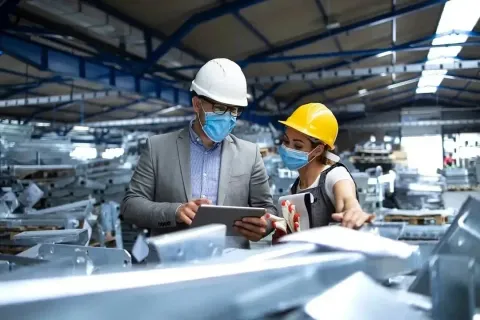
Automation does not eliminate the need for people. Operators, technicians, engineers, and quality specialists continue to supervise production, maintain equipment, and monitor system performance.
Today, automated machines are found in manufacturing facilities of various sizes around the world.
Why Automation Has Become Important
Manufacturing has changed significantly over the past few decades. Growing production demands and increasing product complexity have encouraged industries to adopt automated equipment.
Automation helps manufacturers achieve:
- Consistent production quality
- Stable production speeds
- Reduced repetitive manual work
- Better production monitoring
- Improved material handling
- Higher process accuracy
These improvements support efficient manufacturing while helping maintain product consistency.
How Fully Automatic Industrial Machines Work
Although different machines perform different tasks, their basic operating principles are often similar.
Material Input
Raw materials or components enter the machine through automated feeding systems.
Sensors monitor the flow of materials to maintain continuous production.
Processing Stage
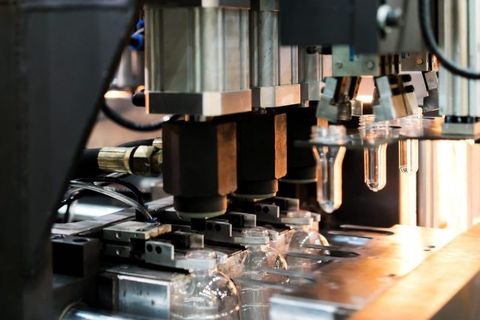
The machine performs its assigned task, such as cutting, molding, filling, assembling, sealing, or packaging.
Every movement follows programmed instructions.
Inspection
Many machines include sensors or vision systems that inspect products during production.
If irregularities are detected, the system may remove affected items automatically.
Finished Product Output
Completed products move to conveyors or packaging stations for the next manufacturing stage.
Main Components
Most automated industrial machines include several important systems.
Control System
The control unit manages machine operations using programmed instructions.
Programmable Logic Controllers (PLCs) are commonly used for this purpose.
Sensors
Sensors monitor temperature, pressure, position, speed, and product movement.
They help ensure consistent operation throughout production.
Actuators
Actuators convert electronic signals into mechanical movement.
These components control motors, valves, cylinders, and robotic mechanisms.
Human-Machine Interface
Touchscreen displays allow operators to monitor production, adjust settings, and review machine status.
Industries That Use Automated Machinery
A wide variety of industries depend on automated manufacturing equipment.
Food Processing
Factories use automation for:
- Filling
- Mixing
- Packaging
- Labeling
- Sorting
Automation helps maintain consistent production while supporting hygiene requirements.
Pharmaceutical Manufacturing
Medicine production often involves automated systems for granulation, tablet production, filling, packaging, and inspection.
Electronics Manufacturing
Electronic products require precise assembly of small components.
Automated equipment improves positioning accuracy during production.
Automotive Manufacturing
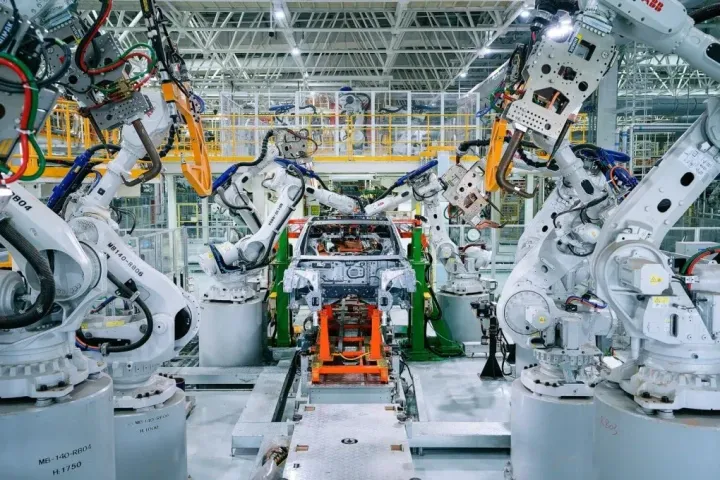
Vehicle production uses automated machinery for welding, machining, assembly, painting, and quality inspection.
Textile Industry
Textile production includes automated weaving, knitting, cutting, dyeing, and finishing equipment.
Advantages of Fully Automatic Machinery
Automation provides practical advantages across manufacturing industries.
Consistent Production
Programmed operations help produce products with similar dimensions and characteristics.
Continuous Operation
Many automated systems operate for extended periods while maintaining stable performance.
Improved Process Monitoring
Digital systems continuously monitor production conditions and equipment status.
Workplace Safety
Automation reduces direct interaction with certain repetitive or potentially hazardous manufacturing activities.
Smart Technologies
Modern manufacturing increasingly combines automation with digital technology.
Artificial Intelligence
Artificial intelligence assists with production monitoring, quality analysis, and predictive maintenance.
Machine Vision
Camera systems inspect products for dimensions, positioning, labeling, and surface quality.
Industrial Internet of Things
Connected equipment exchanges operational data across manufacturing systems.
Managers can monitor production remotely using digital dashboards.
Predictive Maintenance
Sensor data helps identify maintenance requirements before unexpected equipment interruptions occur.
Common Machine Categories
The term Chinese Fully Automatic Industrial Machine covers many different types of manufacturing equipment.
Examples include:
- Packaging machines
- Filling equipment
- CNC machining centers
- Injection molding machines
- Labeling systems
- Conveyor systems
- Robotic assembly equipment
- Laser cutting machines
- Printing machines
- Material handling systems
Each machine is designed for specific industrial applications.
Safety Features
Modern industrial equipment incorporates multiple safety measures.
Common examples include:
- Emergency stop buttons
- Protective guards
- Safety sensors
- Light curtains
- Alarm systems
- Automatic shutdown functions
Routine inspections and operator training remain important parts of safe machine operation.
Environmental Considerations
Manufacturing continues moving toward improved environmental performance.
Many modern machines focus on:
- Efficient energy use
- Reduced material waste
- Improved production planning
- Lower emissions
- Smarter process control
These developments support more sustainable manufacturing practices.
Automated Machinery Overview
| Equipment Type | Common Application |
|---|---|
| CNC Machine | Precision machining |
| Filling Machine | Liquid and powder filling |
| Packaging Machine | Product packaging |
| Injection Molding Machine | Plastic component production |
| Conveyor System | Material transportation |
| Robotic Assembly System | Automated assembly |
Future Developments
Automation continues advancing rapidly.
Current areas of innovation include:
- Collaborative robots
- Digital twin technology
- Artificial intelligence integration
- Cloud-based production monitoring
- Advanced robotics
- Smarter vision inspection systems
These technologies help manufacturers improve operational efficiency while supporting consistent product quality.
Why Understanding Industrial Automation Matters
Even for people outside manufacturing, understanding automated machinery provides valuable insight into how everyday products are produced.
From packaged foods and household appliances to medical equipment and automobiles, automated production systems contribute to many products used in daily life.
Learning about these technologies also highlights how engineering, software, electronics, and mechanical design work together to support modern manufacturing.
Conclusion
A Chinese Fully Automatic Industrial Machine represents the combination of mechanical engineering, automation, and digital technology within today's manufacturing environment. These machines support industries ranging from food processing and electronics to automotive production and pharmaceuticals by performing complex tasks with consistency and precision. As automation, artificial intelligence, and connected manufacturing continue evolving, fully automatic industrial machinery is expected to remain an important part of modern production systems.